TUFF
Bet on your screen time. Beat your friends.
Role
Product Manager and Designer
Timeline
Spring 2026
Stack
React Native, Node.js, PostgreSQL, Stripe, Apple ScreenTime API
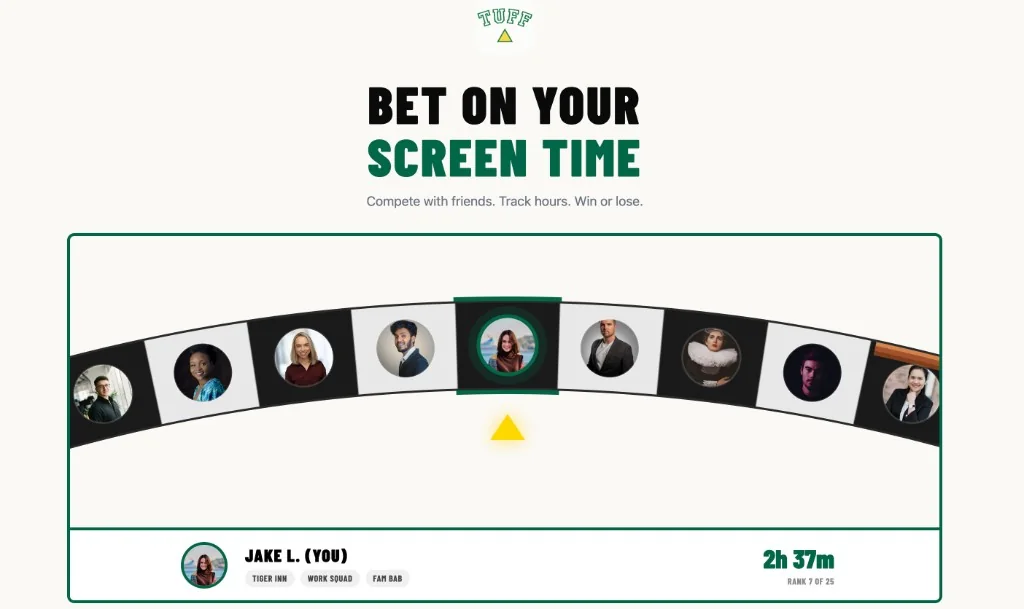
TUFF is a real-money screen time betting app for college students. Users join leagues with friends, compete to use their phones the least, and the winner takes the pot. What started as a basic screen time tracker became a social competition platform after user research revealed that tracking alone does not motivate people, but betting against friends does.
Screen time apps don't work
Everyone knows they use their phone too much. Apple Screen Time tells you. Google Digital Wellbeing tells you. You get a notification, feel mildly bad, and open Instagram. The problem is not awareness. It's motivation. Passive tracking has no stakes.
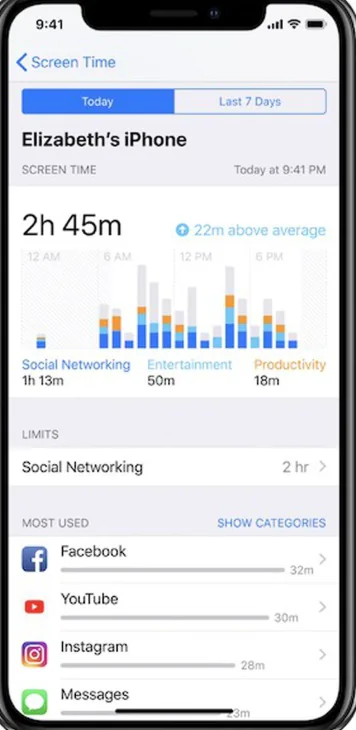
The status quo: a notification you ignore.
Nobody got excited about tracking. Everyone got excited about betting.
Our original concept was a general screen time tracker. We brought mockups to friends expecting validation. Instead, what lit people up was a throwaway idea: what if you could bet against each other? We scrapped the tracker and rebuilt around competition with real stakes.
How we tested before we built
Before writing production code, we ran informal research in three phases.
Casual Conversations
Talked to friends about screen time frustration. Identified that stakes and competition were the emotional trigger, not tracking features.
Mockup Walkthroughs
Showed designs to 5 to 10 people and watched their reactions. Noted confusion points and moments of genuine excitement.
Prototype Signups
Built a working signup and league creation flow. Five people agreed to join a league on the spot at the first demo.
Excitement
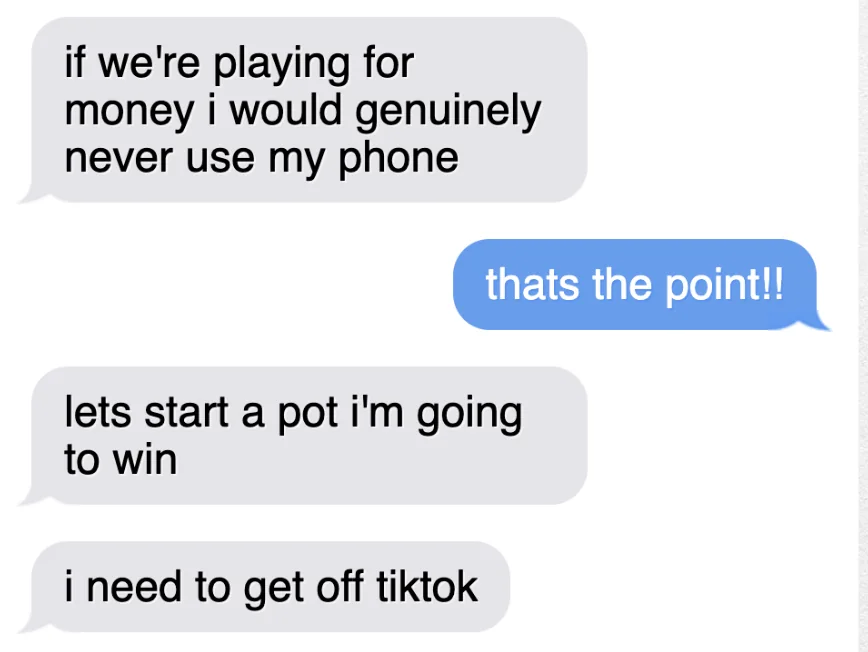
Five people said they would sign up immediately when the app launched. Demand was confirmed before a single production feature was complete.
Skepticism
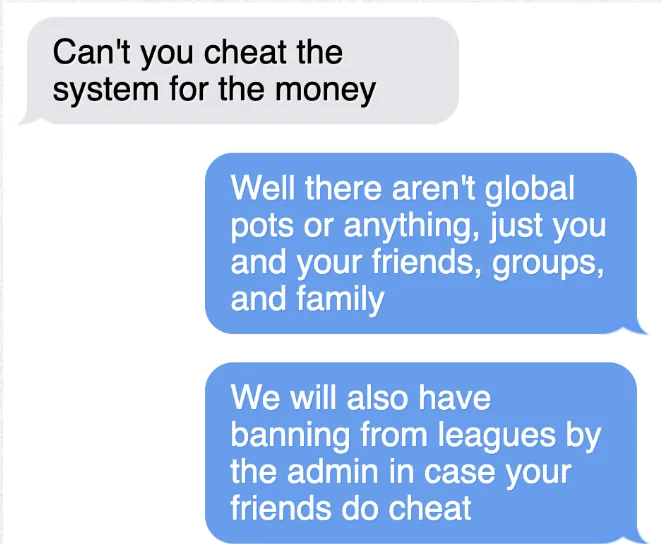
Users immediately asked: what if someone cheats? What if they turn off tracking? This surfaced a core product requirement around trust and data integrity.
Money Hesitation
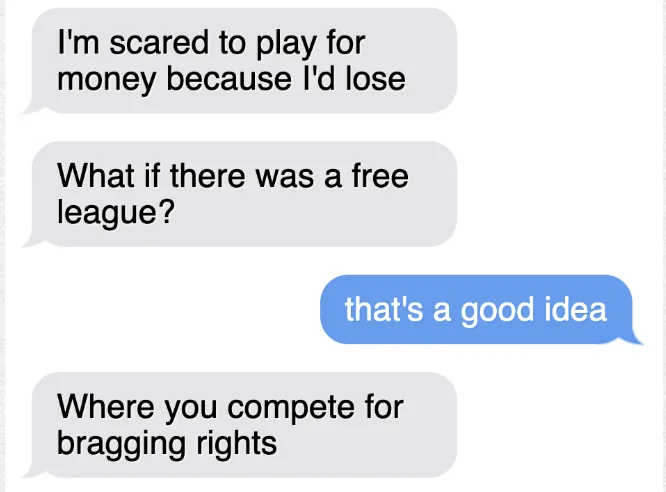
One user said he thought the app was cool but admitted he would not use it because he would lose since he uses his phone too much anyway. This became the insight behind free league mode.
Recreations of real conversations.
“I'd lose because I use my phone too much anyway.”
What we learned
Financial risk deters the users who need the product most. A $20 buy-in is a barrier, not a motivator, for someone who knows they have bad habits.
What we changed
Added Free League mode. Users can compete for bragging rights with no money required.
“What if I have no friends on the app yet?”
What we learned
An empty social app gets deleted. Day-one value has to exist before the social layer kicks in.
What we changed
Built contact-based friend adding into onboarding so users have a network before they reach the home screen. Added a global feed showing real users' screen times and solo analytics tools for standalone value.
“Five people want to sign up right now.”
What we learned
Demand is confirmed. The bottleneck is launch speed, not product fit.
What we changed
Reprioritized the MVP to get a working league into real users' hands as fast as possible.
What we built
The Wheel
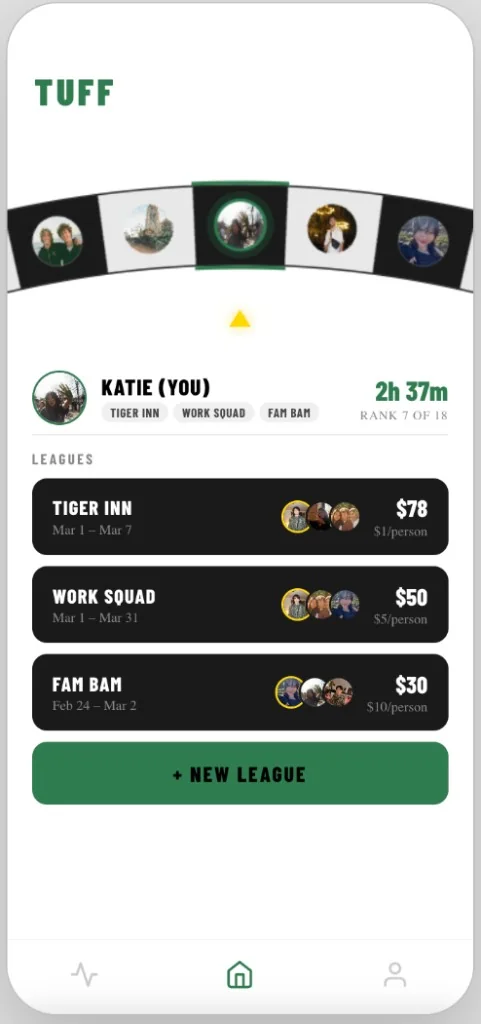
The first thing you see is a roulette-style ranking arc at the top of the screen. It spins on open and lands on your position. A leaderboard number is easy to ignore. A wheel that lands on you is not.
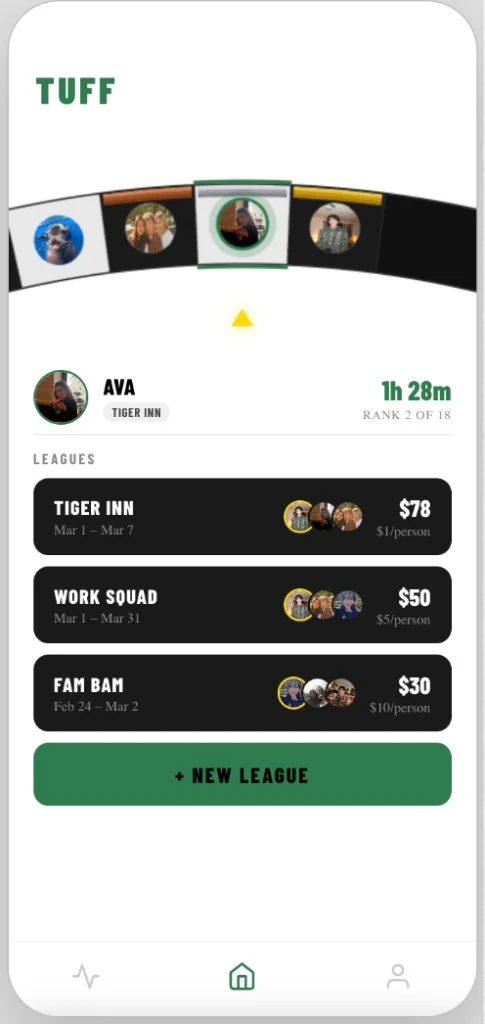
Leagues
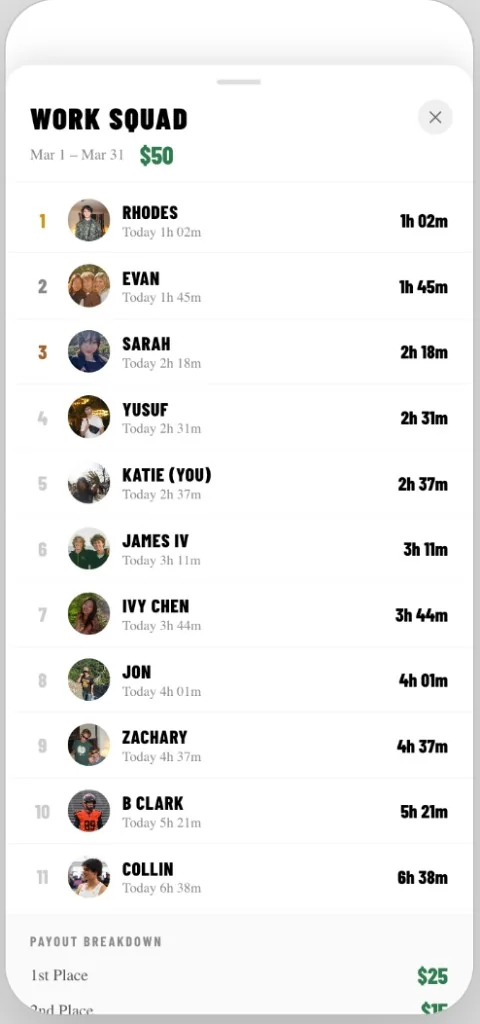
Each league card shows the pot size, date range, and top three profiles at a glance. Tap in for the full ranked leaderboard with payout breakdown at the bottom.
Profile and History
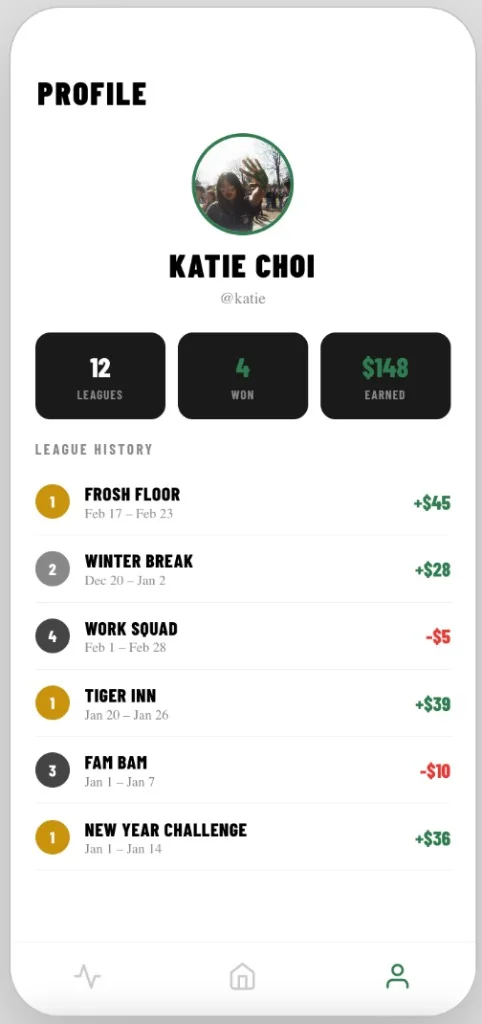
Your lifetime earnings are front and center. Every league, every finish position, every dollar won or lost. The number makes your behavior tangible.
Stats
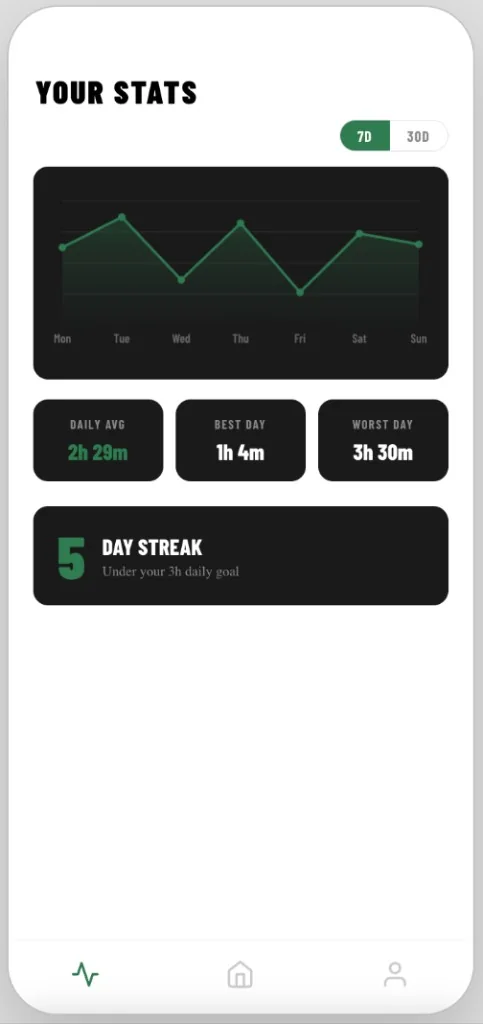
A 7-day usage chart, daily average, best and worst day, and a streak counter for days under your goal. This screen exists to help you actually improve, not just compete.
How it's built
The architecture is intentionally simple for the MVP. Four layers, no over-engineering.
Layer 1
React Native app — iOS and Android from one codebase
Layer 2
Node.js backend — Auth, league logic, screen time processing, payments
Layer 3
PostgreSQL + Redis — PostgreSQL for primary storage, Redis for real-time leaderboard caching
Layer 4
Integrations — Apple ScreenTime API, Android UsageStats API, Stripe, Firebase
The screen time API integration was the riskiest dependency, so we validated it in week one before building anything else.
What I'd take to the next project
Don't validate the idea. Validate the emotion. Tracking got polite nods. Betting got “wait, seriously?” That reaction is the signal worth chasing, not a filled-out survey.
Ship the scary feature first. We front-loaded the riskiest technical piece before building anything users would see. If it fails, you want to know in week two, not week seven.
One conversation can fork your roadmap. Casey's comment about losing money created Free League mode. Avery's comment about having no friends created our entire onboarding architecture. Talk to users before you finalize anything.