TapInn
A mobile-first social platform for Princeton's eating clubs.
Role
Product Manager and Design Engineer
Timeline
Spring 2025
Team
Tiger Inn, Princeton COS
Stack
Python, Flask, PostgreSQL, HTML/CSS/JS, Princeton CAS
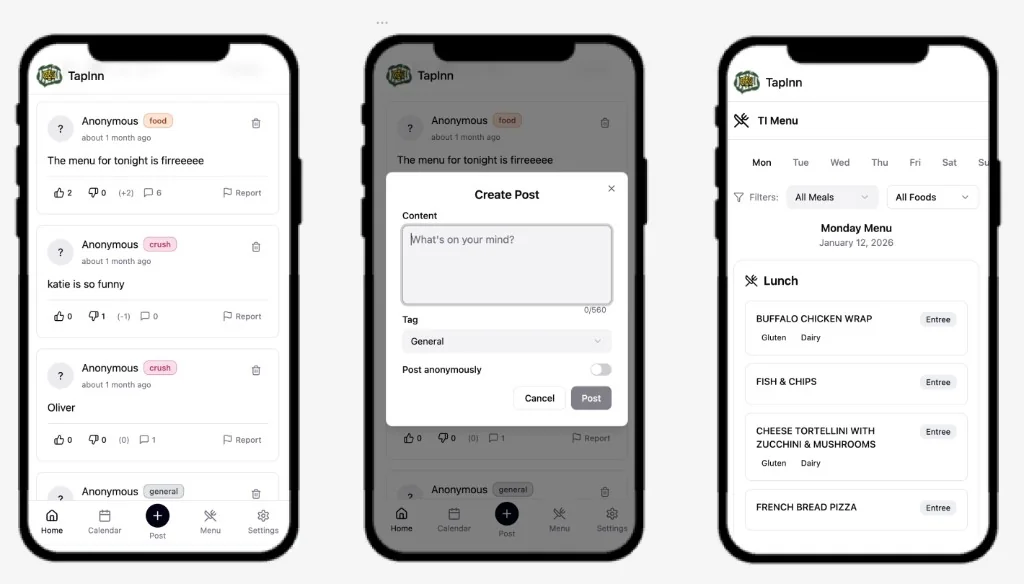
TapInn is a NetID-verified mobile app built for Princeton's eating clubs. Members were scattered across GroupMe threads, email chains, and direct messages with no central place to communicate. TapInn consolidated all of it into one mobile-first platform with anonymous posting, event calendars, weekly menus, and admin tools, built around the specific social dynamics of eating club life.
Eating clubs run on GroupMe
Tiger Inn has no dedicated digital space that matches how tight-knit the community actually is. Members cobble together GroupMe chats, email threads, and Instagram DMs to stay in the loop. Nothing is organized, nothing is verified, and nothing is built for the way people actually communicate on mobile. The information exists. It's just everywhere at once.
80%+
of members expressed anxiety about having their name attached to posts and questions
3+
separate platforms members used to stay informed
0
mobile tools built specifically for eating club communication

GroupMe


Where group communication currently lives
We talked to 50+ members before writing a line of code
Before defining the product, we ran structured interviews and polls with Tiger Inn members to understand what was actually broken. We asked about satisfaction with email, GroupMe, and direct messaging. The most important finding had nothing to do with features.
“I don't post questions or jokes because my name is attached to everything.”
Tiger Inn member, user interview
Over 80% of members said the same thing. They were self-censoring because no platform gave them any anonymity. This single insight reshaped the entire MVP. Anonymous posting went from a nice-to-have to a non-negotiable.
What the research told us
Platform Fatigue
Members were not failing to communicate because they did not want to. They were failing because the tools were fragmented and none of them were built for this context. GroupMe was too cluttered. Email was too formal. Instagram was too public.
Identity Anxiety
The most consistent finding across interviews was anxiety about name visibility. Members held back jokes, questions, and complaints because everything they posted was attributed to them. This was the core friction point the product needed to solve.
Officer Overhead
Club officers were managing membership, announcements, and moderation across separate tools with no admin infrastructure. Every operational task required workarounds. They needed mobile tools, not more platforms.
Research directly shaped the MVP
“I don't post because my name is attached.”
What we learned
Self-censorship was killing community engagement before it could start. Verified identity and anonymous posting had to coexist.
What we changed
Built one-tap anonymous posting into the post creation flow as a core MVP feature, not a stretch goal.
“I never know what's happening until someone texts me.”
What we learned
Event information was falling through the cracks because no single place owned it. Members were relying on word of mouth for things the club was already organizing.
What we changed
Prioritized a mobile social calendar in the MVP to replace scattered event announcements with one source of truth.
“Moderating reports across platforms is a nightmare.”
What we learned
Officers were doing real administrative work with zero dedicated tooling. If the platform launched without robust admin tools, moderation would fail immediately.
What we changed
Mobile admin dashboard with member management, report review, and post deletion shipped as a core MVP feature alongside member-facing features.
What we built
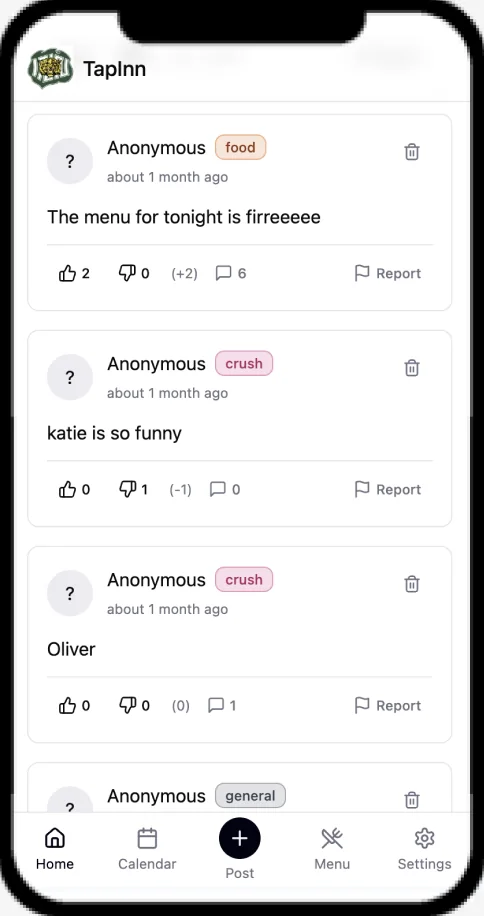
Home Feed
A centralized timeline of posts sortable by recent or trending, with tag filtering for organized discovery. Designed for mobile scrolling first, with quick access to post creation and navigation at the bottom.
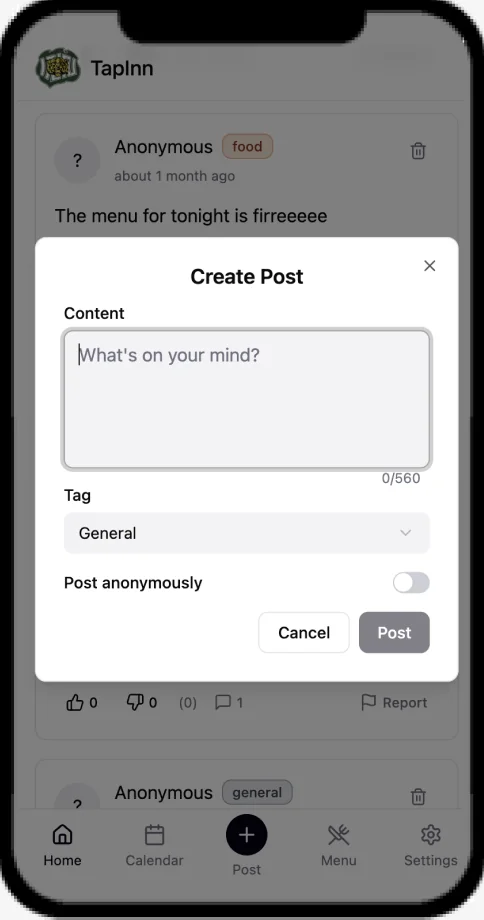
Anonymous Posting
Members can post text with tags and toggle anonymity before submitting. One tap. The feature that 80% of users said they needed before they would post anything at all.
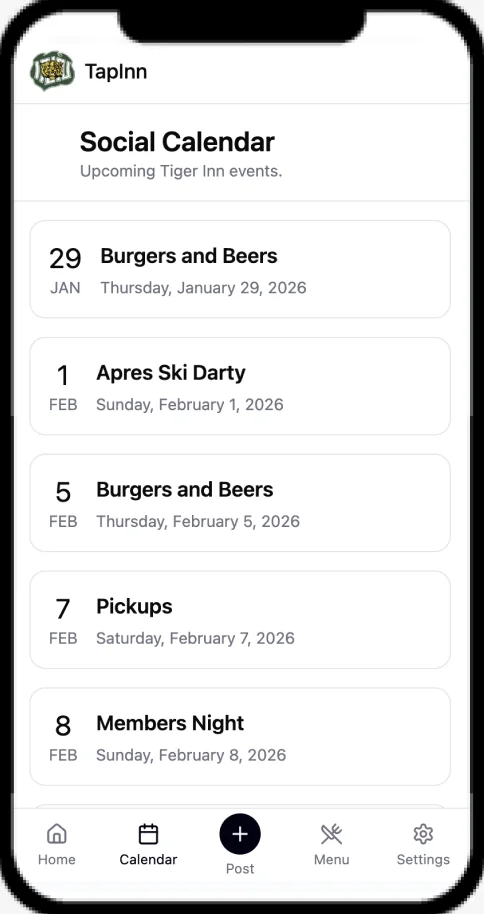
Social Calendar and Menus
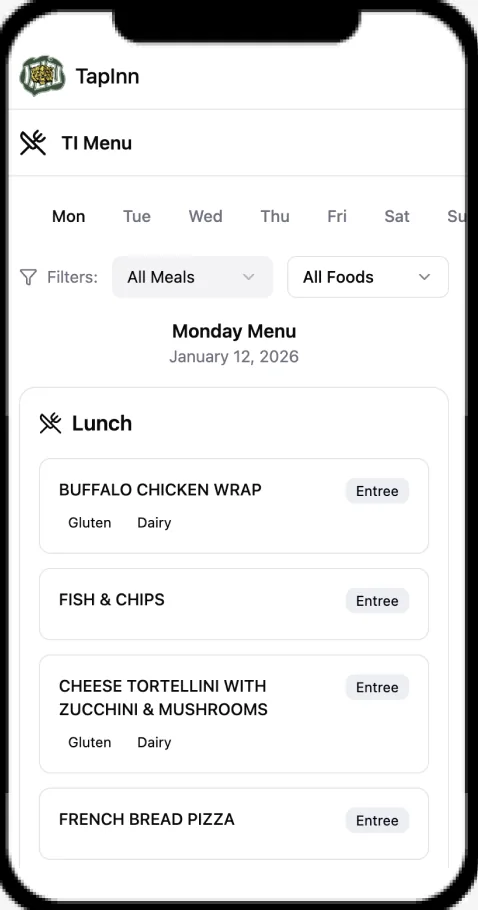
Upcoming events organized by date with a dedicated calendar view. The menu tab shows the weekly menu with allergen filtering, replacing physical menu boards with something members can check from anywhere.
Admin Dashboard
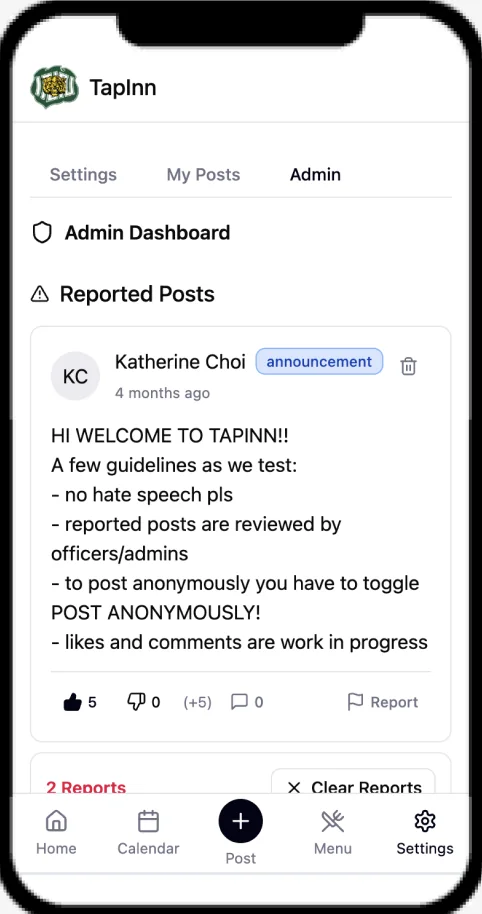
Officers get a separate mobile view for managing members, reviewing reports, and moderating content. Everything that previously required a workaround now lives in one place.
We launched to officers before members on purpose
A social platform with no content is a dead platform. We structured the rollout in two phases to make sure members arrived to something worth using.
Alpha — Officers First
Admin features and core posting shipped to the officer corps first. This seeded the feed with real content, validated the mobile experience with power users, and gave us moderation infrastructure before the broader community joined.
Beta — Member Rollout
Once officers had established content volume and the admin tools were validated, members were onboarded. Officers drove adoption through mobile-first announcements and events posted natively through the app.
Starting with officers was not a compromise. It was the strategy. Critical mass has to come from somewhere, and the people most invested in the club's operations were the right first users.
How it's built
Straightforward stack chosen for fast deployment and Princeton's existing infrastructure.
Layer 1
Browser-based mobile UI — HTML, CSS, JavaScript, responsive design
Layer 2
Python and Flask backend — Routing, authentication, post logic, admin tools
Layer 3
PostgreSQL — Posts, users, comments, reports, member relationships
Layer 4
Integrations — Princeton CAS (NetID authentication), Heroku (deployment)
Princeton CAS integration was the foundation the whole product depended on. Verified NetID login is what made anonymous posting safe — members knew the community was real even when individual posts were not attributed.
We tested with real members using real tasks
Conducted usability testing with Tiger Inn members using think-aloud protocol. Participants were familiar with social apps but new to TapInn.
100%
task completion rate across login, posting, filtering, and menu navigation
85%
code coverage across the core application
188
tests across 6 modules
The bottom navigation felt immediately familiar. The menu feature was called the most useful part of the app by every participant. Anonymous posting was described as the thing that would actually make people willing to post. The areas that needed work were also clear: the feed needed better visual feedback when switching sort options, and the comment submit button was not prominent enough.
What I'd take to the next project
The most important finding will not be about features. We went in expecting feedback about navigation and functionality. What we found was that people were afraid to post. No feature list would have surfaced that. Only conversations did.
Seed your social platform before you open it. Launching to officers first was the right call. A feed with content is a completely different product from an empty one, and first impressions in consumer apps do not get second chances.
Anonymous and verified are not opposites. The thing that made anonymous posting work was that the underlying identity was verified. Members trusted the community because NetID login meant everyone was real. That combination was the whole product.